
Written by Queen Mary University of London MA International Relations student, Mx. Adam Khan (they/xe)
As a trans, non-binary, and agender person, I have always sought to integrate my identities with both my activism and my academics. The opportunity to have a placement in Mexico enabled me to gain a deeper insight into a different, and often more violent context for the trans community. This ties into the wider journeys which I am taking in life, of which I have been organising and creating spaces for the trans community, most recently helping organise the largest trans rights protest in the world to date, London Trans+ Pride. I am also planning my master’s thesis, which will be contextualising the trans murder rates in Mexico and Brazil, which are by far the highest in the world, and problematising it within the International Relations discipline.
Before my journey to México, I knew that it was a syncretic culture which had embedded colonial and patriarchal cisheteronormativity. Despite this, I kept an open mind and utilised my interpersonal skills to have conversations, ask those difficult questions, and learn. The programme which I was on was entitled ‘Beyond Borders’, which ties in well with my MA International Relations degree. The programme, provided by Tecnológico de Monterrey, gave us insights into gendered perspectives on migration, regional contextualisation within México and Latin America, and a plethora of discourses and narratives to utilise within these conversations. Alike many people in the trans community, I have multiple marginalisations which means that if I didn’t receive a Bursary from QM as well as the Turing Scheme funding, this programme would have been inaccessible to me.

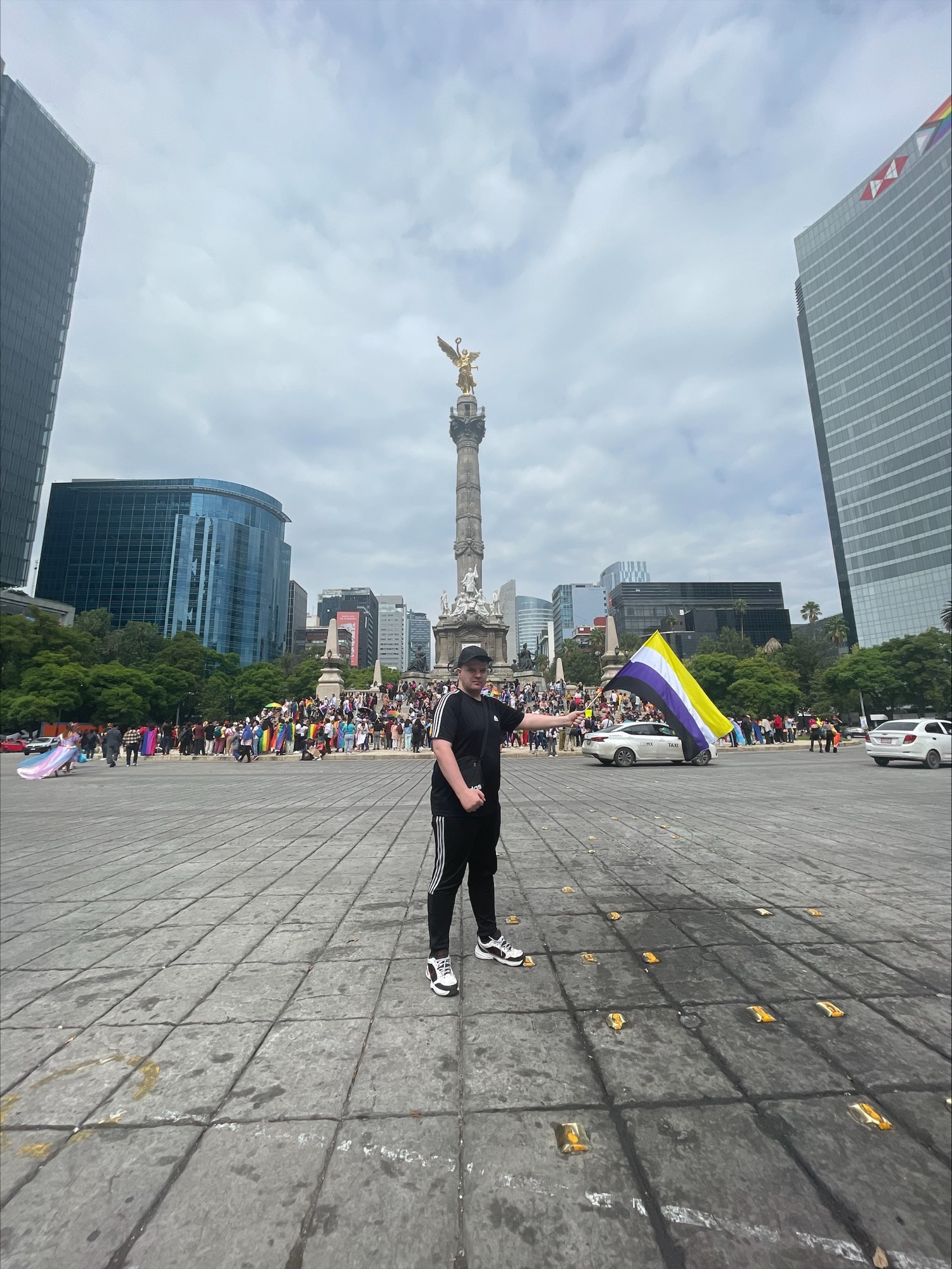
Expanding on the academic side of learning whilst in México, it was always my plan to be pragmatic and utilise my networking and research skills to learn more about the true trans experience in the country, beyond what I saw every day, which included deeply entrenched gendered norms, consistent binary gendered language, and understandingly, a lack of trans visibility. My programme was timed well, which enabled me to have a free day in México City on the same day as México City Pride. I naturally gravitated to the radical block of the march, where I networked with various organisations working to bring justice to the trans community in the country, as well as listening and learning from people who had lost loved ones due to transfemicide. These networks and conversations enabled me to understand the real issues that the trans community faces within Mexican society and humanises each and every struggle for liberation and justice. I was privileged to be asked to help carry and deliver a coffin, which was inscribed with the names of trans people who had been murdered recently, to the government of México building as a statement to them. Surprisingly, a few weeks later, the City of Mexico government passed a law making transfemicide a crime in its own right, with a prison sentence of 70 years. In much smaller news, I did end up making the front page of some newspapers!
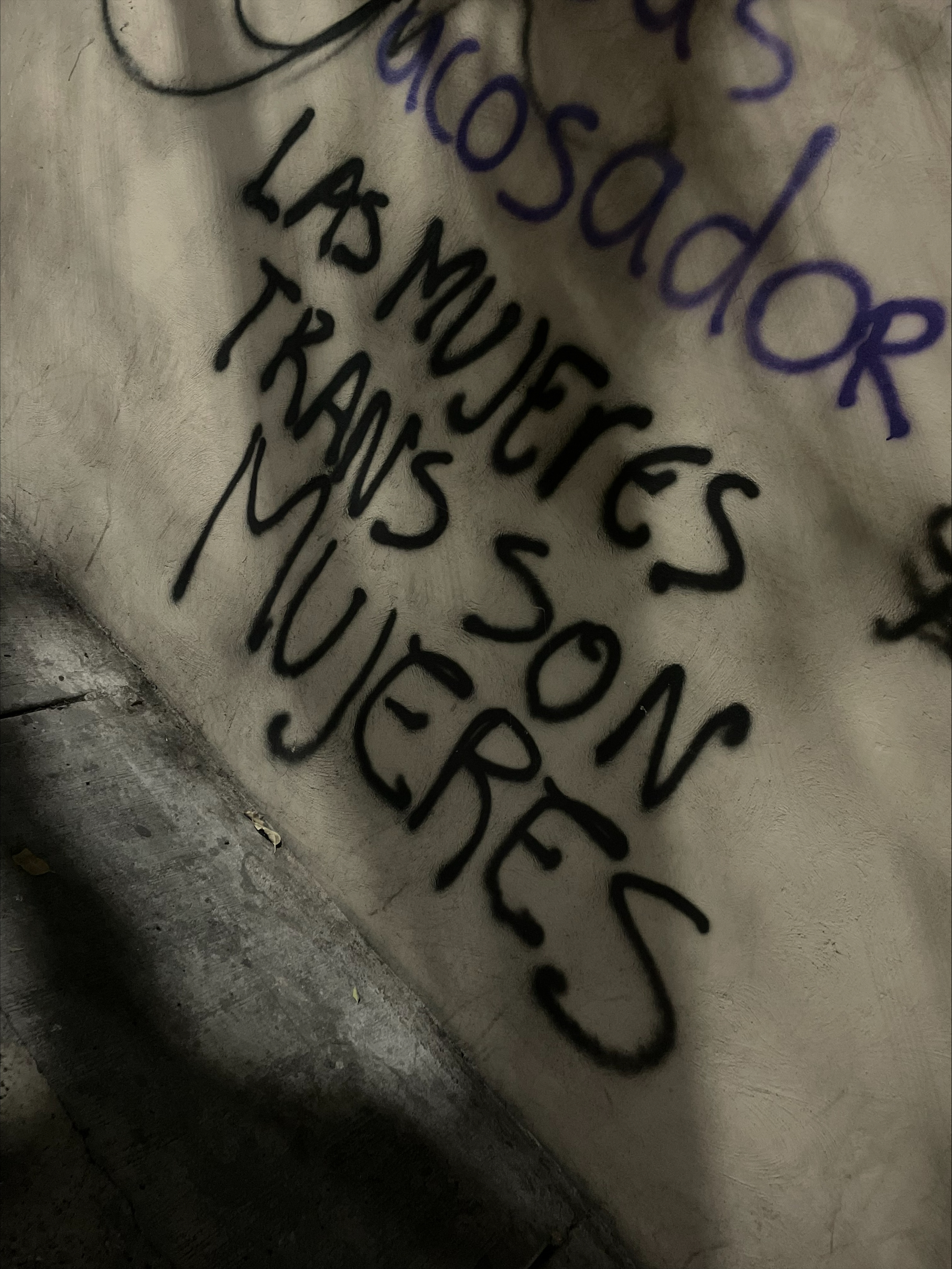
Beyond this, especially in the different areas of Chiapas which I stayed in, I continued to learn about how resistance movements in this part of the world embraced intersectionality within their causes. In every city I visited, I saw feminist graffiti, all of which was trans-inclusive, highlighting issues such as violence against women and girls, in a very public manner to provoke conversations and hopefully be part of a wider solution. The integration of indigenous non-binary concepts of gender into indigenous resistance was not only affirming, but also a powerful reminder that colonialism, neocolonialism, and its binary norms are still being challenged. Overall, I have learned a lot about being trans in a different, and statistically more dangerous, context in a region of the world which is still often overlooked by Western media, even though it is geopolitically Western leaning itself. My learnings have enabled me to gather valuable resources for my academic research, as well as having established transnational links with organisations fighting for trans liberation.
Mx. Adam Khan (they/xe) | MA International Relations
QM/BL Trans Representative 24/25 | QMSU LGBT+ Society Co-President 24/25
 Queen Mary Global Bloggers